Methi Chicken
Fenugreek Chicken
Mya & Devin,
This is the kind of dish that shows up without announcement. No special occasion, no planning; just a bunch of methi that needed to be used, chicken in the fridge, and the instinct to make something that feels right on a cold evening.
You’ve eaten this more times than you probably realize. It’s the dinner that quietly lands on the table when the days are shorter and everyone is a little hungrier than usual, when something warm and savory matters more than anything fancy. It’s not a showpiece. It’s just real food—the kind that fills the kitchen with the smell of ginger, garlic, and methi and lets you know you’re home.
These days I still make it the same way, just with fewer plates on the table. The quantities are smaller, but the habit hasn’t changed. Some recipes don’t belong to a single momen, they just keep showing up, feeding whoever happens to be home.
How This Became a Winter Staple
Methi chicken found its way into my cooking over many winter evenings in the kitchen with Aaji. It’s tied to the season, when fenugreek shows up at the store, when the garden is mostly greens, when our bodies seem to ask for warmth. Fenugreek has a strong personality; it’s slightly bitter, a little sweet, and this dish lets it be itself. Ginger, garlic, and chicken hold everything together. It’s a reminder that bitterness can be comforting, and that good food doesn’t need much, just time, attention and seasonal ingredients.
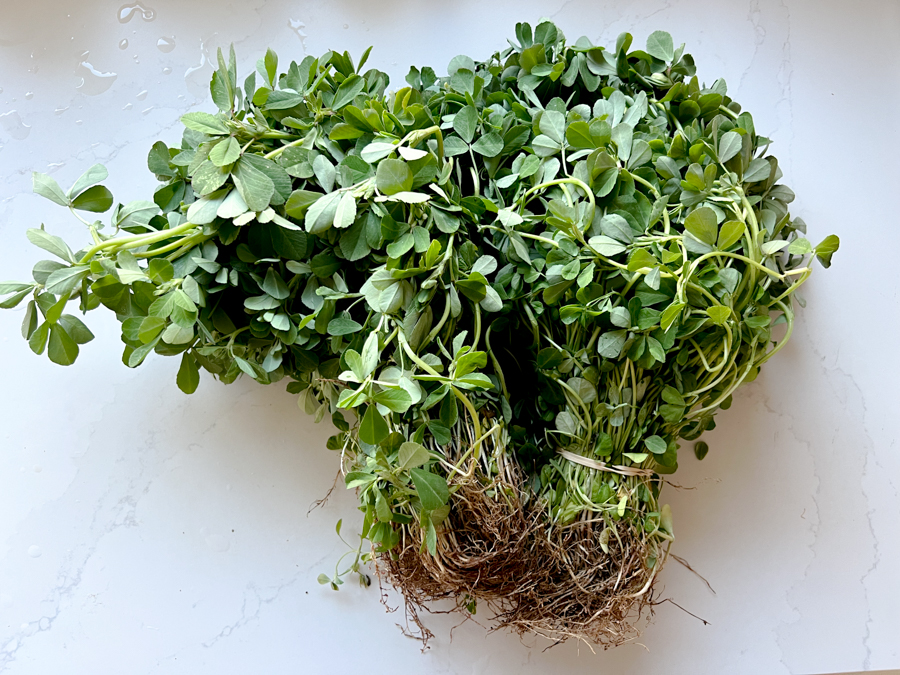 Growing Your Own Methi (Fenugreek) at Home
This is one of those kitchen skills that becomes a life skill. Both your grandmothers grew methi not because it was trendy, but because it was practical. Fresh methi is seasonal and sometimes hard to find so they simply grew it.
Fenugreek doesn’t grow like most leafy greens. Each leaf you harvest comes from an individual seed, which means what you’re really growing is a dense carpet of tender sprouts. It’s one of the few greens that rewards impatience.
Here’s the method I use, learned from watching your Ba and Aaji and then repeating it enough times to trust it:
- Soak dried methi seeds overnight. This softens the seed coat and jumpstarts germination. Don’t skip this step, dry seeds planted straight into soil are slower and less reliable.
- Scatter the soaked seeds over hydrated soil. No neat rows needed. Methi likes company. I use shallow trays or wide pots so the sprouts grow close together.
- Cover lightly and water every other day. The soil should stay moist but never soggy. Overwatering leads to bitterness and weak stems.
- Harvest in about four weeks. When the leaves are young, tender, and fragrant, that’s the sweet spot. Older methi is tougher and more aggressively bitter.
Growing your own changes how you cook this dish. You’re less precious with the greens, more generous with handfuls, and more connected to the rhythm of the season. And once you’ve grown methi yourself, it’s hard not to notice how different it tastes. It tastes brighter in a way that store-bought bunches sometimes don’t.
Ingredients for Methi Chicken
Bone-In Chicken Thighs
I always reach for bone-in thighs here. They stay succulent, forgive long cooking, and quietly enrich the sauce as collagen releases into the pan. If I can find organic, air-chilled chicken, I use it simply because it tastes better and holds moisture more reliably.
Fresh Methi (Fenugreek Leaves)
These tender sprouts cook down dramatically, so don’t be shy, you’ll need more than you think. Their bitterness mellows with heat and fat, transforming into something earthy and aromatic. If you’re growing your own (a trick I learned from both my mom and mother-in-law), harvest when the leaves are young, that’s when the flavor is assertive but not sharp. (No fresh methi? See substitutions below )
Chopped Onions
Onions are the foundation of this curry. Cooked slowly, they soften, sweeten, and dissolve into the sauce, rounding out methi’s bitterness and giving the spicesand aromatics somewhere to land. You’re not looking for deep browning here. When they turn translucent with lightly golden edges, the base is ready to carry everything that follows.
Ginger Paste
Ginger anchors the flavor of this dish.Its peppery warmth complements methi’s bitterness beautifully. Young ginger is best here. It’s bright, juicy, and less fibrous. I usually grate it on a microplane straight into the pan (less cleanup, more aroma).
Garlic Paste
Garlic deepens the savoriness, but timing matters. Added after ginger, it softens gently instead of scorching. Burnt garlic will compete with methi’s bitterness in the wrong way.
Tomato Paste
Tomato paste brings concentrated umami and subtle sweetness without turning this into a tomato curry. I freeze leftover paste flattened in a zip-top bag and break off pieces as needed — a small habit that saves waste and time.
Green Chilies
Slivered and added raw, they offer brightness more than heat. Jalapeños are grassy and mild; serranos are sharper and slightly sweeter. I choose based on mood and who’s coming to dinner.
Cayenne Pepper
This controls the heat, not the identity of the dish. A little goes a long way. Kashmiri chili powder is a great swap if you want warmth without intensity.
Turmeric
Used sparingly, turmeric lends earthiness and that unmistakable golden hue. It shouldn’t be a strong flavor in the finished dish, just barely discernible in the background.
Tools I Reach For (and Why)
A heavy, enamel-coated Dutch oven or braiser is ideal here. Cast iron holds heat evenly, which matters when you’re braising chicken and greens together especially during the final covered cook, when everything melds.
I like enamel because it’s forgiving (less sticking, easier cleanup), and because it moves seamlessly from stove to table. This is a dish meant to be served family-style, spooned generously, without fuss.
How to Make Methi Chicken (Step-by-Step)
Heat the Oil in a Dutch Oven
Warm the oil over medium heat and let it heat fully before moving on. This sets the foundation for the dish and ensures the aromatics bloom rather than steam.
Sautee onions
Add the chopped onions and cook over medium heat, stirring occasionally, until they soften and turn translucent, about 8–10 minutes. You’re building sweetness here, not color. If the onions start to brown, lower the heat and let them relax. The goal is a gentle, steady cook that sets up the rest of the dish.
Cook the Ginger Until Fragrant
Add the ginger paste and stir gently. It should sizzle softly and release its aroma without browning. This step defines the flavor base of the dish.
Add Garlic and Soften Gently
Stir in the garlic paste and cook just until mellow and aromatic. Lower the heat if needed — burnt garlic will overpower the bitterness of the methi.
Bloom the Spices and Tomato Paste
Add the tomato paste, turmeric, and cayenne, stirring until the mixture darkens slightly and the oil begins to separate. This concentrates flavor without turning the dish into a tomato-forward gravy.
Add the Chicken and Coat Evenly
Add the chicken pieces and turn to coat them in the spiced base. Let the chicken sit undisturbed for a minute or two to build depth without aggressive browning.
Add Fresh Methi and Green Chilies
Add the slivered green chilies and fresh fenugreek leaves. It will look like too much at first, but the greens will quickly collapse and soften into the sauce.
Cover and Simmer the Methi Chicken
Cover the pot and lower the heat. Let the methi chicken simmer gently until the chicken is tender and the flavors have fully melded.
Finish and Adjust Seasoning
Uncover, taste, and adjust for salt and heat. The finished dish should be saucy but not soupy, with bitterness balanced.
Substitutions & Variations
No Fresh Methi?
Use hearty greens like kale or chard, plus 1 tablespoon crushed kasuri methi added near the end. Kasuri methi delivers that signature burnt-sugar aroma that echoes fresh fenugreek beautifully.
Want It Richer?
Use skin-on thighs. Render the skin first, remove the chicken, and use the fat in place of some oil before proceeding. It adds a subtle richness without overpowering the greens.
Make-Ahead & Storage
Methi chicken can be made a few hours ahead, but it’s even better the next day. The bitterness softens, the sauce deepens, and everything settles into itself. Bone-in chicken reheats especially well.
FAQ
What does methi taste like?
Slightly bitter, earthy, and aromatic with a faint maple-like sweetness when cooked.
Can I use frozen methi?
Yes. Thaw and squeeze out excess moisture. Fresh is brighter, but frozen works well.
Is methi chicken spicy?
Moderately. Heat is adjustable based on chili choice and quantity.
Can I make this with boneless chicken?
You can, but bone-in delivers better texture and flavor.
What should I serve it with?
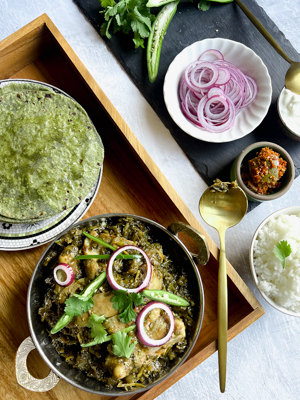
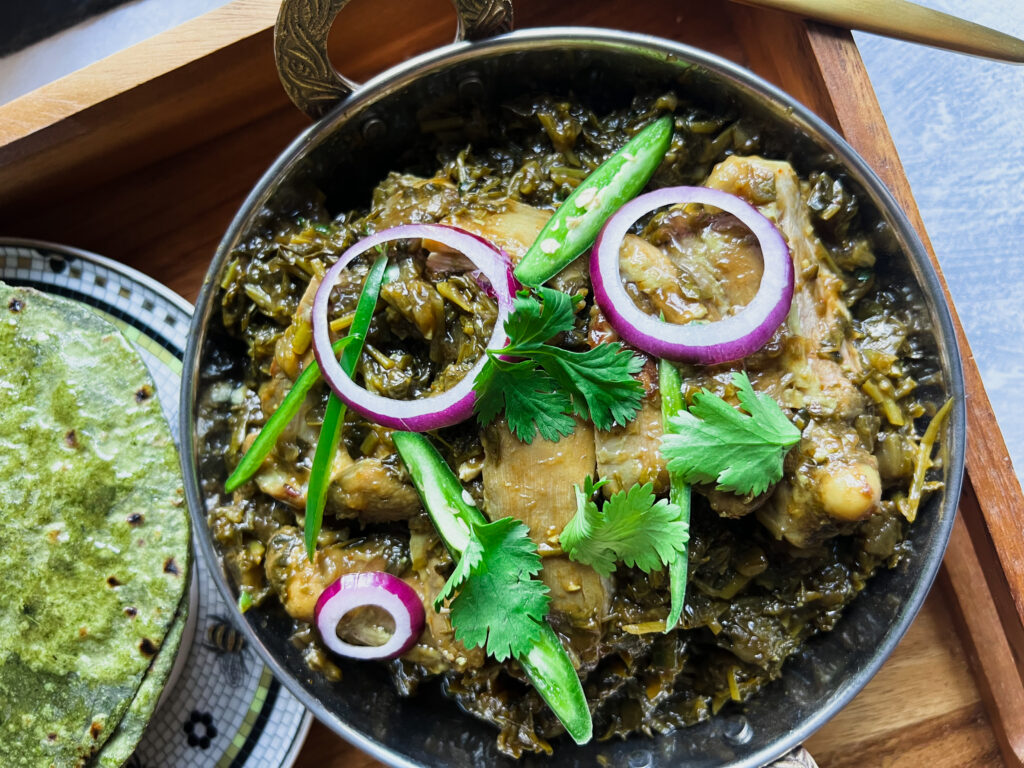
Simple basmati rice, naan or rotlis. I love serving it with spinach rotli.
How long does it keep?
Up to 3 days refrigerated, tightly covered.